Each year we call for nominations for positions on the ADG board and subcommittees. ADG is run by volunteers, and the more people who put their hands up, the more we can achieve together.
All positions are open for nominations, and descriptions of the various roles are available on the ADG website. Please get in touch if you would like more information.
If you are interested in nominating for a position on the ADG Board, as a State Representative, the Tournament committee, or on the High Performance committee, please complete the nomination form by 8.00pm AEDT, Tuesday 10 November 2026.
The form asks for a few details about yourself, the name of an ADG member who supports your nomination, and your relevant skills and experience. If you know someone who would be great in one of these roles, please encourage them to nominate and offer your support. We welcome nominations from members of all backgrounds and encourage diversity across our organisation.
Board positions will be voted on, if required, and the results announced at the Australian Disc Golf, Inc. Annual General Meeting.
2026 ADG Annual General Meeting
Tuesday 8 December 2026 at 8:30pm AEDT
The AGM will be held online and provides an opportunity to hear about the past year in Australian disc golf, learn about plans for the year ahead, and contribute your questions and suggestions.
The agenda, annual reports, meeting link and further details will be available on the ADG website before the AGM.
We hope you can join us and consider getting involved!
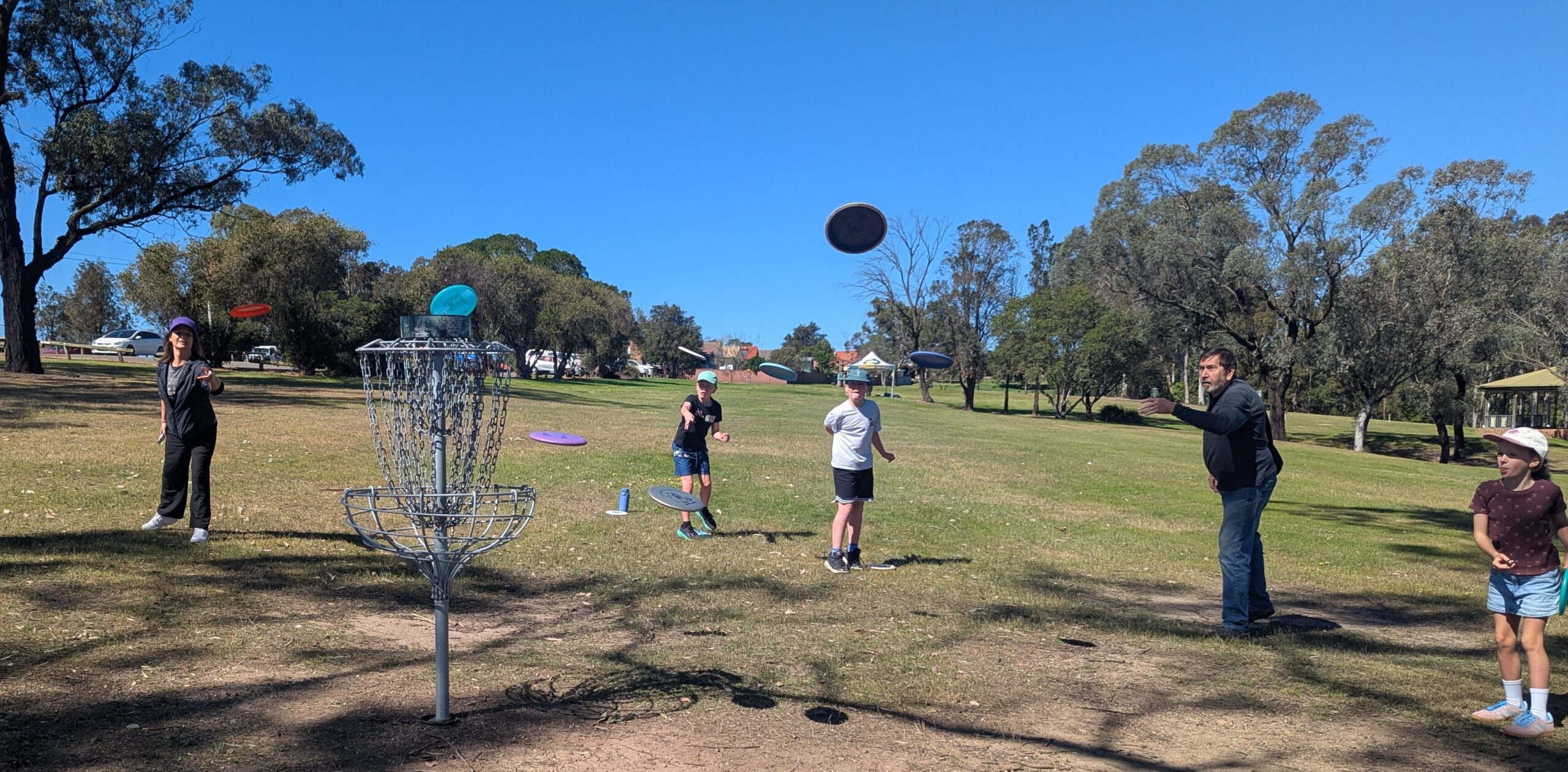
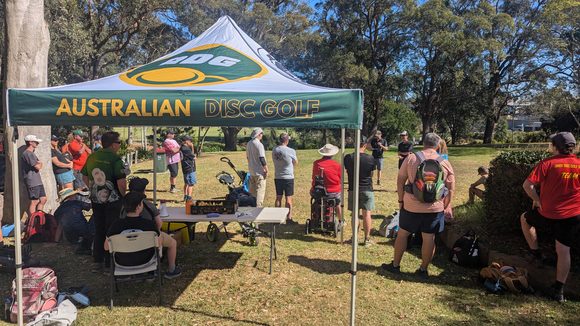
This year, Australian Disc Golf launched Discover Disc Golf, a nationally branded come-and-try program that makes it easy for clubs to welcome newcomers to the sport. Four clubs put their hands up for the first year, and we couldn’t be prouder of what they achieved. Across four events in three states, more than 150 people picked up a disc, many of them for the very first time.
Reaching beyond the disc golf community
One goal of Discover Disc Golf was to reach people who aren’t already in our circles, and the promotion side of the program showed a lot of promise. Each event had its own EventBrite page, which made events easy to find and simple to register for. ADG also reached out to local councils and community event pages on social media to get the events listed where locals already look for things to do.
On top of that, we ran small targeted digital ad campaigns for the Newcastle, North Queensland and South Australian events. For a total spend of around $150, those ads were seen more than 44,000 times by over 25,000 people in the local areas. They also drove more than 500 clicks through to the event pages. South Australian Disc Golf told us the combined advertising from ADG and the National Park really helped their turnout.
Four clubs, four great days
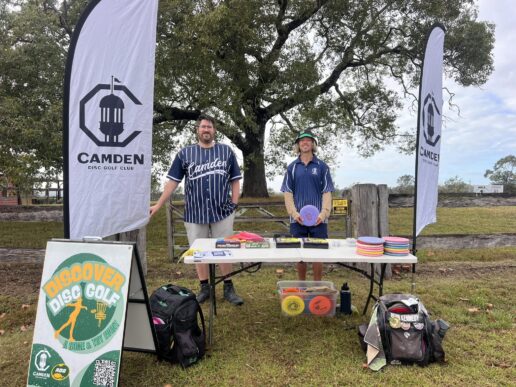
Camden Disc Golf kicked things off with the inaugural Discover Disc Golf event on 24 May. They set up at a larger community fair at Belgenny Farm in Camden South. The club ran a drop-in setup where passers-by could stop, have a throw and learn what disc golf is all about. Around 100 people came through, and four volunteers were on hand to help. Newcomers could also win starter sets. It was a different format from the events that followed, but a great way to put disc golf in front of people who might never have come across it otherwise.
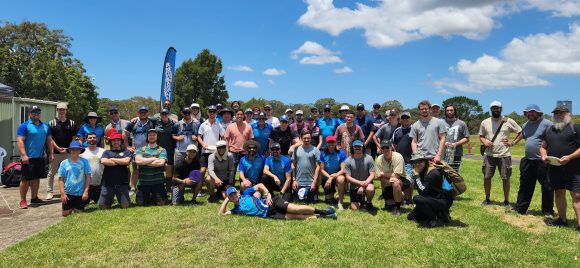
Newcastle Disc Golf hosted their event at Stockade Hill in East Maitland on 6 September. Twenty people came along, 14 of them brand new to the sport, supported by six volunteers. The club set up a shorter course layout just for beginners and had a volunteer play alongside each group. Both are great tips for any club planning a come-and-try day.
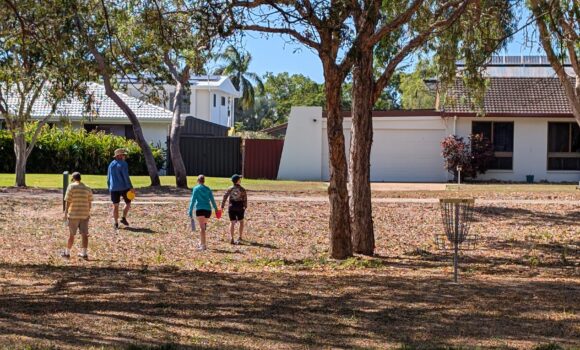
North Queensland Disc Golf Club brought Discover Disc Golf to Marabou Park in Annandale on 13 September. Eighteen people attended, and 15 were throwing for the first time. With a couple of volunteers at the main table and others roaming the course to help out, the club expects four or five new faces to keep coming back.
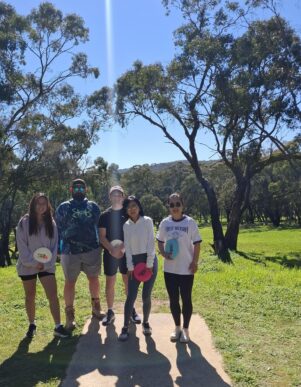
South Australian Disc Golf closed out the season at Belair National Park on 19 September. Thirty people attended, and 28 were new to disc golf. One volunteer signed people in and ran a 15-minute intro to the basics. Then the group split up to play four baskets, with a volunteer guiding each group. The club also made it a double-header by running their Aussie Disc Golf Day event straight afterwards. Every newcomer received an ADGD mini so they felt part of the nationwide celebration. Three starter packs were sold on the day, and around nine attendees are expected to return.
A few themes came through in every club’s feedback. Having plenty of volunteers made a huge difference, keeping the atmosphere relaxed and giving every newcomer someone to learn from. Short, beginner-friendly layouts got people throwing and enjoying themselves quickly. Structured sessions with a quick intro and small guided groups helped newcomers feel confident.
Across the four events, 18 volunteers gave up their time. Clubs estimate around 20 new players will keep coming back. That’s a real boost to local disc golf communities, and it started with a single welcoming morning or afternoon.
Where to from here?
Plenty of clubs around the country already run their own come-and-try days, and supporting that work is something ADG cares about deeply. This first year of Discover Disc Golf has given us a lot to build on. We saw clubs already running great beginner events, and with a little coordinated promotion, those events reach well beyond our existing community.
We’re now looking at how Discover Disc Golf could grow in the future, including how it might support more clubs across more of the year. Watch this space. In the meantime, if your club runs come-and-try events or would like to, we’d love to hear from you at admin@australiandiscgolf.com.
A huge thank you
Thank you to Camden Disc Golf, Newcastle Disc Golf, North Queensland Disc Golf Club and South Australian Disc Golf. Thanks also to every volunteer who made this first year happen. You’ve shown what’s possible, and you’ve laid the groundwork for something much bigger.
Every sport has people who make it what it is. They give their time and energy so that others can discover the joy and camaraderie of disc golf, and they rarely ask for thanks. The Australian Disc Golf Hall of Fame is our chance to say it anyway. It is the sport’s highest honour, and nominations are now open.
What the Hall of Fame recognises
Hall of Fame inductees have made significant contributions to disc golf in Australia through development, promotion, leadership or sportsmanship. We value the whole tapestry of a disc golf life, and we know there are many ways to shape a community.
To be considered, a nominee must:
Have been involved with disc golf in Australia for more than 10 years
Have made a significant contribution to the sport
Be a good role model for others
Six ways to make a difference
A nominee doesn’t need to excel in every area, but their overall body of service should show exceptional impact in one or more of these:
Infrastructure & Innovation: designing, installing or maintaining sustainable courses, and providing the expertise or equipment that lets the sport grow.
Playing Achievements: pioneering competitive play in the sport’s early years, or a long record of excellence at state, national or international level.
Event Leadership: directing or organising leagues and championships, with a focus on quality, logistics and innovation in format.
Organisational Leadership: founding or leading clubs and state associations, serving in executive roles, and building the governance that keeps the sport sustainable.
Promotion & Advocacy: raising public awareness through media and content, or working with councils and government to secure funding and recognition.
How to nominate
Anyone in the community can nominate someone using the short online form. You’ll share your details and the nominee’s, then tell us about their contributions and lasting impact in two brief statements of 300-500 words each. You can also tick the categories that apply and add supporting links or photos if you have them. Specific examples work best, so name the courses, events and roles that made a difference.
How nominations are assessed
Nominations are accepted at any time, and the selection panel reviews all nominations confidentially each October. Each panelist reviews every submission independently and scores the nominee across the six categories using a structured rubric. They consider the nominee’s transformative impact, distinction from peers and long-term influence.
Think about the person who has kept your club running for years, the one whose courses you play every weekend, or the mentor who got you hooked. If they meet the criteria, put their name forward.
Fifty years ago, someone in Australia threw a disc at a target for the first time. This September, we’re marking that anniversary the way our community knows best: on the course, together, at Aussie Disc Golf Day.
To celebrate 50 Years of Flight, we’re inviting everyone involved in Aussie Disc Golf Day 2026 to pick up a camera (or just a phone) and help tell the story of this milestone weekend.
Why this matters
Aussie Disc Golf Day is already a special event. On the 50th anniversary of the sport’s arrival in Australia, it’s also a chance to capture a snapshot of where the sport stands today, at every skill level, in every corner of the country, all on the same two days.
Photos from ADGD26 will help tell the story of Australian disc golf’s first fifty years, and the next fifty.
The categories
Four categories, covering everything that makes an Aussie Disc Golf Day event what it is:
Most Scenic – Show us Australia at its best.
In Flight – Capture the sport in motion.
Humour – If it made your card laugh, we want to see it.
Community – Friendship, mentors, and tireless volunteers.
How to enter
Get out to your local Aussie Disc Golf Day 2026 event on September 19–20.
Snap your best shot in one (or more) of the four categories.
Submit it through the entry form by Tuesday 29 September, 6pm AEDT.
Prizes and judging
Winners in each category get a framed print of their winning photo. Entries are judged by popular vote, with a poll emailed to all ADGD participants and organisers. Winners are announced Wednesday 7 October.
Get involved
Whether you’re teeing off in your first tournament or you’ve been playing since before some of our courses existed, this is your chance to be part of the record.
Full details, including the entry form, are in the flier below.
A serious knee injury on an Ultimate Frisbee field in Houston, back in 2013, is not the origin story you’d expect for one of Australian disc golf’s most experienced team managers. But for Ken Summers, that’s exactly where it started.
From Ultimate to disc golf
“I used to play a lot of Ultimate Frisbee and, for a long time, I had no idea Disc Golf even existed,” Ken says. That changed in 2014, when a few friends convinced him to come along to a local disc golf league day, mostly just for a laugh.
“I didn’t expect much, but after that first round I was hooked. There was something about the mix of competition, strategy, and being outdoors that immediately clicked with me.”
At the time, Ultimate was still his main sport, and he kept playing for several more years. But the Houston injury gradually took its toll and the constant high-impact movements became harder to sustain. Disc golf offered a way to stay part of the flying disc community without the same physical demands.
“What started as a casual league night soon became my primary sport. Over time, I found myself spending less time on the Ultimate field and more time on the disc golf course.”
Looking back, Ken calls it a turning point: “That one league day in 2014 completely changed my sporting journey. I turned up expecting a bit of fun with friends and ended up discovering a sport that has become a huge part of my life.”
A team veteran
Eleven years into disc golf (and roughly 25 into Ultimate before it), Ken now heads into his fourth national campaign in a management role. He shared management duties with Jonathan (JJ) Jonas at Estonia 2019, managed the squad at Croatia 2022, served as Tournament Director for the 2024 WTDGC on home soil in Mundaring, and now leads the Masters Team into the 2026 WFDF World Team Disc Golf Championships campaign in Lithuania.
The team co-captains, JJ Jonas and Ken Summers, have been working hard organising rosters, planning, attending meetings, and generally coordinating everything for the team in Estonia 2019.
Ask him for his philosophy and you get one line that says a lot about how he approaches the role:
“Do not ask of others what you are not prepared to give yourself.”
The week before Lithuania
It’s a fitting mantra for someone juggling a full-time career alongside team management. Ken is a Cyber Security Specialist at Rio Tinto, and by his own admission, the lead-up to a campaign is anything but quiet.
“First and foremost, my day job needs to be squared away so I don’t leave my team with any headaches,” he says. In the week before departure, his focus shifts to making sure all the player paperwork is in order, keeping an eye on flights (particularly given the uncertainty around the Middle East and any potential travel disruptions) and reminding everyone to pack their team uniforms. There’s a Masters team meeting to run, one-on-one calls to make, and, in his words, “more than my fair share of coffee” to get through.
Ken and Sue Summers hard at work
Beyond the logistics, there’s still preparation to do on the disc golf side: researching the teams in their pool, studying the courses they’ll play, and staying in regular contact with Open Manager Bryce, Coach Aaron, and the rest of the leadership group to keep everything on track.
“So no, it won’t be a peaceful week. But I wouldn’t have it any other way.”
What he’s looking forward to
For Ken, it comes back to the team. “Being part of a team and watching Australia shine as a squad and at individual levels. There will be highs and there will be lows, but we will all rise together.”
The people behind the manager
Ken was quick to point out that campaigns like this aren’t a one-person job, and he wanted a few people acknowledged by name.
Sue Summers, he says, is “very much my rock.” The two work together on a lot of things, and Ken values her ability to see decisions from a different angle. Her input has helped shape many of the calls made along the way.
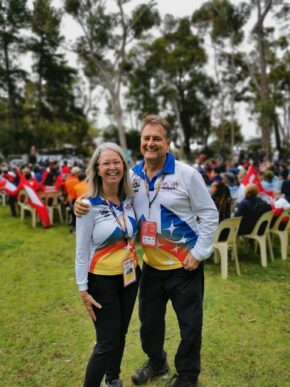
Ken and Sue Summers at the WFDF WTDGC 2024 in Mundaring WA
He also singled out the team’s uniform crew — Darren, Kirsten, Gina, and Chris — for putting together a kit the squad can be genuinely proud to wear. And a special mention went to Carl Bellisini of RagTop Designs, who has had a hand in producing the majority of Australia’s national disc golf uniforms over the years. From concepts and artwork through to print-ready files, Ken credits Carl’s professionalism and creativity as invaluable to getting the team out onto the course looking the part.
Ken is one of many people working behind the scenes to get the Sugar Gliders to the start line in Lithuania. Follow along as we introduce more of the team in the lead-up to WFDF WTDGC 2026
If you’ve ever tried to convince a local council to support a disc golf course, you’ll know the drill: they want data, comparable examples, budget figures, and a clear sense of community benefit and pulling all of that together from scratch is one of the biggest hurdles clubs and individuals face when getting a course off the ground.
ADG has started building resources to help make that process easier. But before we go further, we want to make sure we’re actually building the right thing, which means we need to hear from you.
What we’re trying to find out
We’ve put together a short survey with two goals:
Find out what would actually help you when approaching a council. This could be participation statistics, case studies from other councils, budget templates, letters of support, or guidance on navigating zoning and approvals.
Find out what you already have. Many clubs have run their own surveys, tracked course usage, or gathered data that could help other clubs across Australia make their case. These resources could help other clubs just like yours, and we would love to resource share wherever possible.
We’re also keen to hear about any projects or council conversations you’ve got underway right now, even if they’re early, informal, or not yet confirmed. If you’re chatting to a council or exploring a site, we want to know about it so we can offer support now or down the track.
And since we’re sending this out more widely than usual, we’re using it as a chance to find out where disc golfers across Australia actually see ADG news and updates.
Who this is for
This survey isn’t just for club committees. If you’re working solo on an idea, you’ve been part of an informal council conversation, or you’re just curious about what the process involves, we want to hear from you too.
ADG is seeking media coverage for the Australian Disc Golf Championships (ADGC) to document the highlights and stories of the event through photography and video. ADGC will run over two weekends: 27–29 Nov 2026 and 4–7 Dec 2026 in Weston Park, Yarralumla · Canberra, ACT with doubles in the middle. Additional information about the event can be found at www.adgc.com.au
We invite those interested in providing coverage of the event to submit a detailed proposal including the information set out in the linked document here. Please ensure that your proposal addresses all the points in a clear and comprehensive manner. Proposals will be evaluated by the ADG tournament committee and event organising committee. We will consider supporting more than one proposal depending on the coverage they provide, costs and additional requirements.
The premier event on the Australian Masters Disc Golf calendar is heading to the stunning Central West of New South Wales, hosted at the recently redesigned Macquarie Woods 18-hole Championship Course. Set amongst the forests and rolling ranges of the Central West, Macquarie Woods is one of Australia’s most scenic and unique disc golf destinations.
Open to players aged 40 and over from across Australia and around the world, the Aussie Masters 2026 promises four unforgettable days of world-class competition, great camaraderie, and memorable experiences both on and off the course.
Hosted by the Central West Disc Golf Club under Tournament Director Kevin Costa, the event kicks off with the ever-popular State of Origin, followed by the three-day Aussie Masters Championship. Two championship layouts will cater to the range of Masters divisions, ensuring a challenging and rewarding experience for every competitor.
Beyond the competition, players can look forward to a range of social events and opportunities to connect with fellow competitors while enjoying everything the beautiful Central West region has to offer.
Whether you’re chasing a national title, reconnecting with friends, or experiencing an amazing disc golf venue, Aussie Masters 2026 is an event you won’t want to miss.
If you haven’t registered yet, visit the event website for all the information and secure your place: https://aussiemasters.com.au/
Presenting the second issue of the Australian Disc Golf Newsletter!
This is an initiative from ADG to keep our community informed about what’s happening across the sport nationally. We’ll be bringing you quarterly updates covering Board news, upcoming events, community highlights, and important announcements.
Have ideas? We’d love to hear from you. If you have feedback, story ideas, or something you’d like to see in a future edition, get in touch. We hope you enjoy the read.
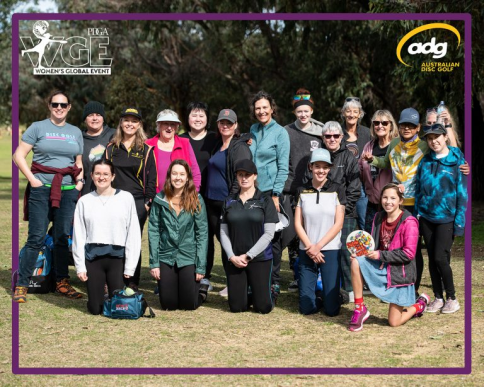
In 2012, three women played in Australia’s first PDGA Women’s Global Event. One event across the whole country. Three players. By 2022 that number reached a hundred women across seven events, from Perth to Sydney. The numbers kept climbing. While the pandemic accelerated the growth of the sport worldwide women did not get left behind. Female participation kept pace with overall growth, remaining steady at around 14% of the playing base even as total player numbers exploded.
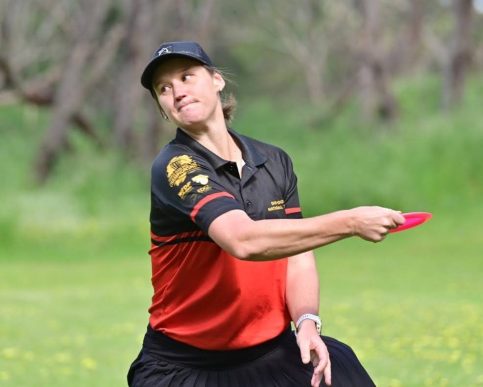
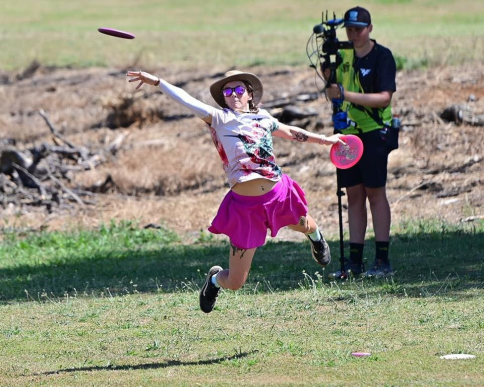
And the playing standard has gone to another level. While still fragmented and geographically dispersed, the era of a single dominant player has passed. This shift was signalled when Kairi Koobakene claimed the Women’s Tour title in 2019. Players like Emma Winkworth, Toosje Frequin, Nicole McPherson and Julie O’Donoghue formed a strong base, and soon a wave of high‑level Ultimate players transitioned into disc golf and began contending regularly for top honours—Gina Hill, Sarah Lee, Sue Summers, Kirsty Murray, and Clare Hussey among them. What has emerged is a competitive field with genuine depth. Other divisions have grown too, the newly created masters division is often the largest women’s field at an event. And the pipeline is stronger. A new generation of juniors is coming through with skill, confidence, and ambition. Anita Weber, Miley Nicholson, Lily Nicholson‑Love, Charlotte Davies, and Lydia Philpott are among the names to watch as the next era of women’s disc golf in Australia continues to unfold.
A lot came together in the 2020s. COVID was part of it. Lockdowns shut down team sports and gyms and people found disc golf – something you could play outdoors with a single disc that cost less than lunch. Courses that had been sitting quietly in suburban parks for years suddenly had traffic on them.
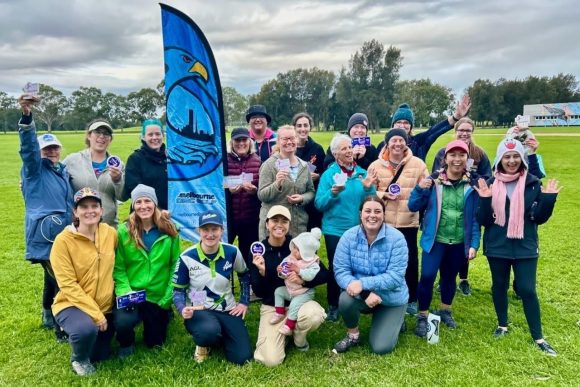
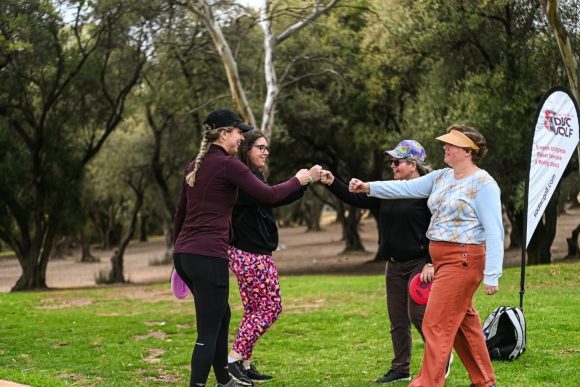
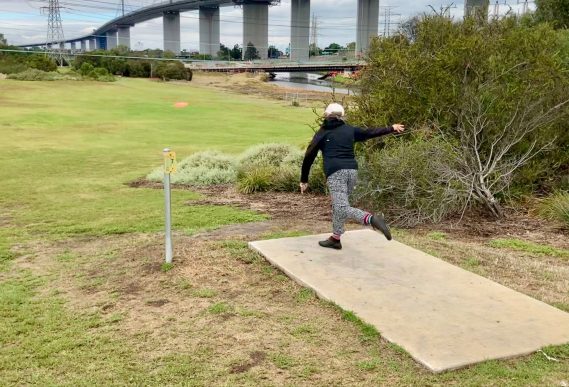
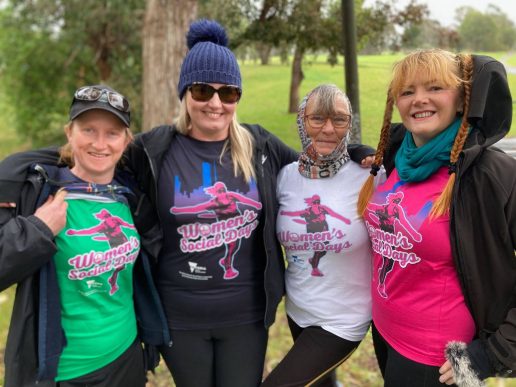
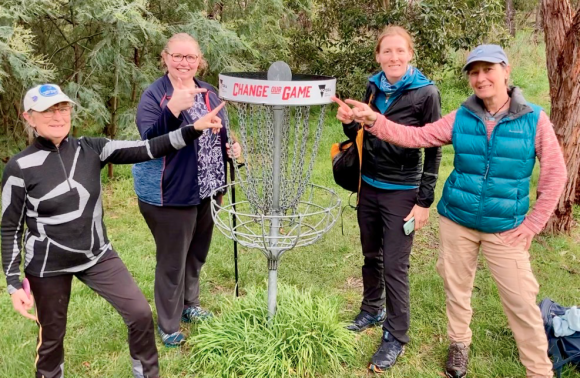
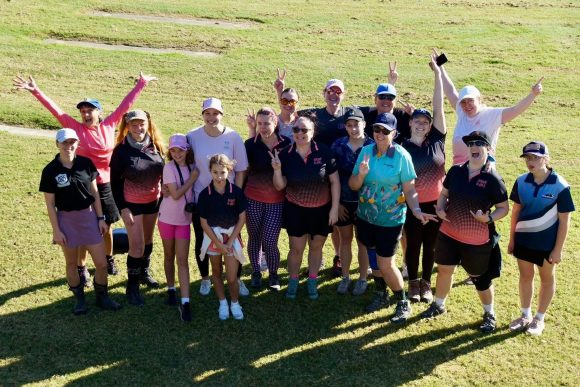
WGE 2022Melbourne Disc Golf Club at their 2024 WGEBirdie Babes Australia at Garden City Open 2026South Australian Disc Golf WGE 2024MDGC WGE 2024 1. Driving at Stony Creek DG courseMDGC Women’s Social Club 2022
But COVID just accelerated something that was already building. The real story is the work.
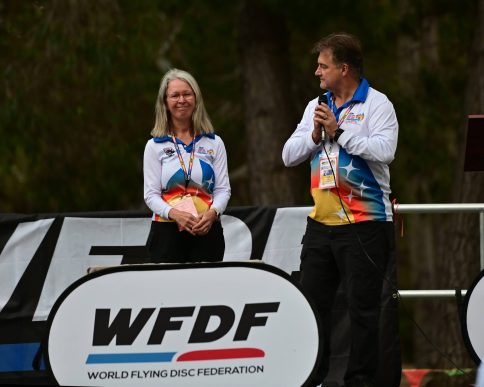
But it is not just on the course that has seen growth. Women are out the front in leadership positions ensuring women play a role in guiding our sport and across the country they are creating spaces specifically designed to bring other women in. Leagues, social days, beginner clinics, mentoring, dedicated women’s events. No one embodies this more than Sue Summers. In 2021, Sue ran Run the Chains for WGE in Perth, achieving the highest female participation ever for an Australian disc golf event. At the time Sue was on the ADG board and was president of Mundaring Disc Golf, becoming the first woman to hold the presidency of an Australian disc golf club. Currently, Sue serves on the WFDF Disc Golf Committee, where her primary focus is women’s participation, gender equity, and inclusion. Sue was integral in bringing the WFDF World team championships to Australia in 2024, taking the event to the next level as co-TD with husband Ken Summers.
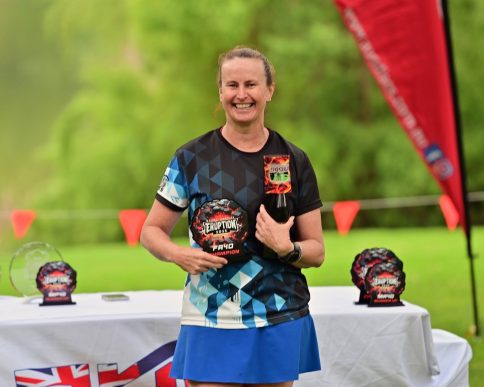
The Women’s Global Event has been a valuable stepping stone for new female TDs: in 2022, five of the seven Australian WGE events were run by women. Women are also leading the country’s largest tournaments. In 2024, Michelle Shultz of SA won the inaugural Tournament Director of the Year award for her work on the Eruption, widely regarded as the most sought-after event on the ADG Tour. That same year, Sharon Costa co‑TDed the Australian Disc Golf Championships in Molong, NSW and was awarded volunteer of the year award along with husband Kevin Costa for their work at Central West Disc Golf. The award nomination cited their work encouraging women across all divisions from Juniors to Masters.
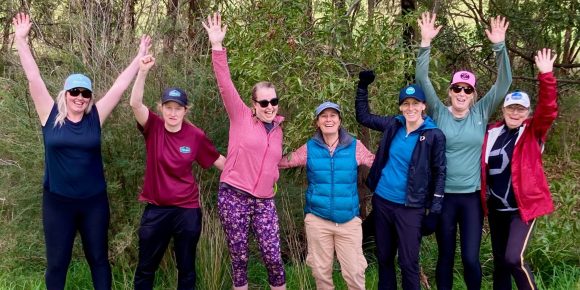
Helping with the visibility of women in the sport are groups like the Birdie Babes. Run by QLDs Tenyse Dark and Ash Dooley, Birdie Babes provides a place to see women playing, to hear what women are doing to help grow female participation and to celebrate women around the country
And the women who started all of this haven’t gone anywhere. Gail P. Lynch, who was the only woman in the room when the AFA formed in 1976, is still on the Melbourne Disc Golf Club board, still securing grants, still pushing for access and inclusion fifty years on. Emilie Cameron guided the national body through its most transformative period before stepping into a general member role after 15 years as Secretary. Cassie Sweetten is still making the national team. The pioneers didn’t just start this. They’re still here.
That’s what fifty years of women in Australian disc golf looks like.
This year marks fifty years since a group of curious players gathered in a South Melbourne park and threw their first Frisbees. In the five decades since, women have been at the heart of Australian disc sports as players, organisers, mentors, and pioneers.
To celebrate this milestone and the 2026 PDGA Women’s Global Event, we’re telling that story in a four-part series. Each week, we’ll share a new era – from the very first throws in 1976 to the thriving community we have today. Along the way, you’ll meet the women who built this sport, often as the only woman on the card, and the new generation who are making sure that’s no longer the case.
Be sure to follow the 50 Years of Flight campaign on Facebook for even more stories, photos, and celebrations as we honour half a century of disc sports in Australia.
Whether you’ve been playing for decades or you’ve never picked up a disc, this story is yours too. The 2026 WGE runs May 15–25, and every woman who shows up is writing the next chapter. Find your nearest WGE event on our website.
We want to take a moment to thank everyone who has helped put this together. A project like this doesn’t happen without the people who capture and embody the spirit of our sport. A special thank you to Emilie Cameron, Cassie Sweetten, Gail P. Lynch, Tenyse Dark, Kingsley Flett (for his photography), and the many other photographers and historians, both known and unknown, whose images and stories help tell the story of Australian Disc Golf. Your contributions are what make something like this possible.
If you would like to help grow the game for women and girls, consider making a donation through the Australian Sports Foundation. This fundraiser is dedicated to supporting the 2026 Women’s Global Event, helping to lower barriers to entry, get more women and girls on the course, and build a future where no one has to be the only woman on the card. Every donation is tax-deductible, and every dollar goes directly toward making disc golf more welcoming and accessible for women at every level. Donate at asf.org.au/preview/back-women-s-disc-golf–wge-2026