The 2000s & 2010s: Competition begins
The Eras of Women in Australian Disc Sports 50 Years of Flying Disc Sports in Australia · 1976-2026
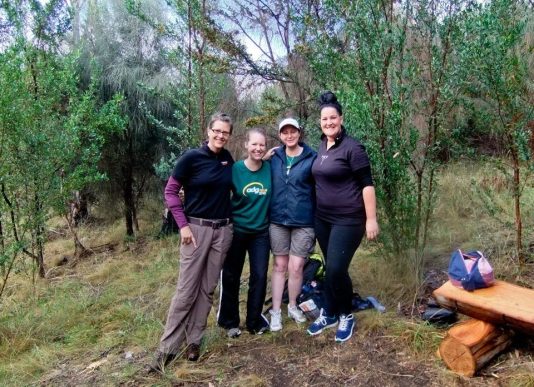
In the mid-2000s, disc golf in Australia started to come back to life. Australian Disc Golf Inc was formed in 2004, permanent courses started appearing across the country, and by 2007 both the Australian Disc Golf Championships and the Australian Disc Golf Tour were underway. Over the next decade, three women’s names are etched on the women’s tour trophy: Sal, Cass and Em.
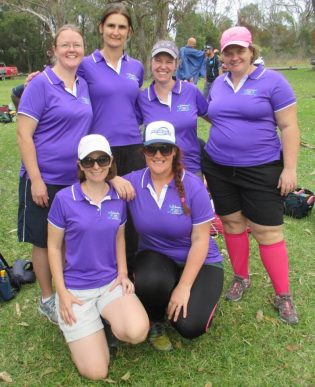
They were friends and fierce rivals on the course, but just as importantly, each played an integral role in building the clubs, courses, and governance structures that allowed the sport to grow into what it is today. As Em later reflected: “We all lived in different areas, so we were often the only women playing and organising at local events. At the bigger tournaments it was really great to come together and actually compete against each other.”
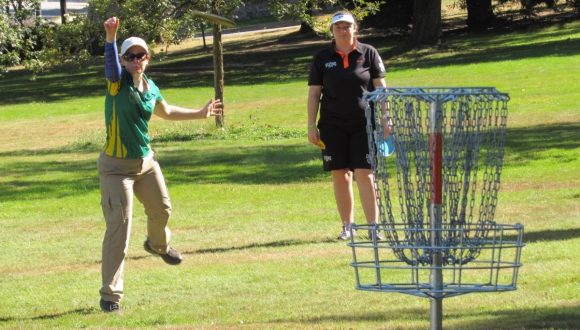
Sally Hill was there from the beginning of the Sydney revival. Coming across from Ultimate, she was part of a group (including Albert Munoz, Luke Williams and Kurt Karlsson) that would set up a temporary course at Macquarie Uni, including a shot through the fountain. Sal won the tour in 2008, 2009, 2014 and 2015. In 2016 she was one of four players to represent Australia at the WFDF World Team Championships in Vancouver, and she later played a role on the inaugural ADG High Performance Committee, helping shape Australian teams.
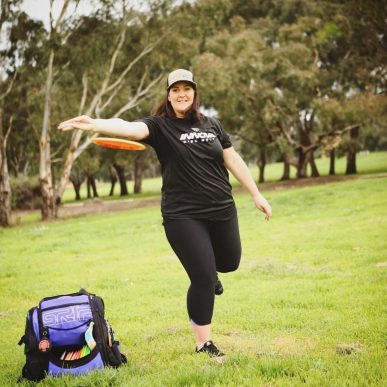
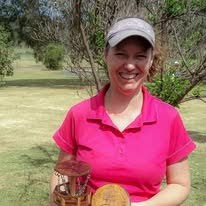
Cassie Sweetten (née Anderson), from Geelong, found disc golf on a trip to Queenstown with now-husband Jarrath Sweetten. They came back and, with friends Andrew Ferguson and Patrick Robinson, founded Geelong Disc Golf, eventually getting a local course in the ground. She was the inaugural winner of the Australian Tour in 2007. She started her run at the championships well, with wins in 2007, 2008, and three more in those first ten years (2012, 2014 and 2015), but stay tuned for what came next!
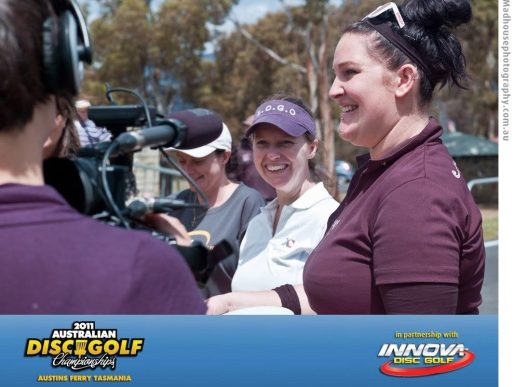
Emilie Cameron took up disc golf with husband Jonathan Jonas during a two-year stay in New Jersey, USA. Playing with the Disc Devils at Rutgers University, Em found a welcoming local scene and, notably, a strong group of women competitors. Returning to Australia in 2010, Em helped found the Newcastle Disc Golf Club and they soon had a course in the ground with more on the way. At the national championships that year, when no one else put their hand up, Em became Secretary of ADG and held the position for the next fifteen years.
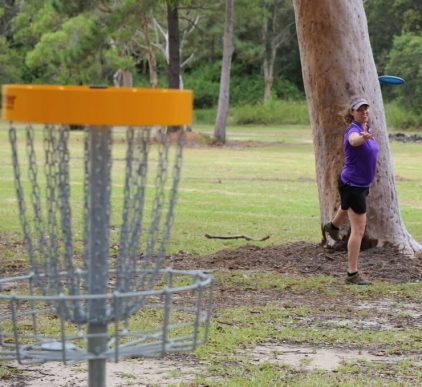
During that time she played a critical role in shaping the direction and position of ADG, consistently ensuring that women’s voices were represented across committees and decision-making spaces, even when that meant joining them herself. Em won the tour for four consecutive years (2010–2013) and was the highest-placed Australian woman at the national championships in 2010 and 2011, finishing behind a visiting US pro. One of her favourite disc golf memories remains taking the box from Valerie Jenkins after Val’s tee shot landed on a boat! Em finally claimed the national crown in 2016. Her nomination for PDGA Women’s Disc Golf Week in 2023 described her as “a wonderful and trusted mentor for women right across the country, who all feel comfortable contacting Em if they have any question on matters of disc golf.”
In the mid-2000s, disc golf in Australia started to come back to life. Australian Disc Golf Inc was formed in 2004, permanent courses started appearing across the country, and by 2007 both the Australian Disc Golf Championships and the Australian Disc Golf Tour were underway. Over the next decade, three women’s names are etched on the women’s tour trophy: Sal, Cass and Em.
They were friends and fierce rivals on the course, but just as importantly, each played an integral role in building the clubs, courses, and governance structures that allowed the sport to grow into what it is today. As Em later reflected: “We all lived in different areas, so we were often the only women playing and organising at local events. At the bigger tournaments it was really great to come together and actually compete against each other.”
Sally Hill was there from the beginning of the Sydney revival. Coming across from Ultimate, she was part of a group (including Albert Munoz, Luke Williams and Kurt Karlsson) that would set up a temporary course at Macquarie Uni, including a shot through the fountain. Sal won the tour in 2008, 2009, 2014 and 2015. In 2016 she was one of four players to represent Australia at the WFDF World Team Championships in Vancouver, and she later played a role on the inaugural ADG High Performance Committee, helping shape Australian teams.
Cassie Sweetten (née Anderson), from Geelong, found disc golf on a trip to Queenstown with now-husband Jarrath Sweetten. They came back and, with friends Andrew Ferguson and Patrick Robinson, founded Geelong Disc Golf, eventually getting a local course in the ground. She was the inaugural winner of the Australian Tour in 2007. She started her run at the championships well, with wins in 2007, 2008, and three more in those first ten years (2012, 2014 and 2015), but stay tuned for what came next!
Emilie Cameron took up disc golf with husband Jonathan Jonas during a two-year stay in New Jersey, USA. Playing with the Disc Devils at Rutgers University, Em found a welcoming local scene and, notably, a strong group of women competitors. Returning to Australia in 2010, Em helped found the Newcastle Disc Golf Club and they soon had a course in the ground with more on the way. At the national championships that year, when no one else put their hand up, Em became Secretary of ADG and held the position for the next fifteen years.
During that time she played a critical role in shaping the direction and position of ADG, consistently ensuring that women’s voices were represented across committees and decision-making spaces, even when that meant joining them herself. Em won the tour for four consecutive years (2010–2013) and was the highest-placed Australian woman at the national championships in 2010 and 2011, finishing behind a visiting US pro. One of her favourite disc golf memories remains taking the box from Valerie Jenkins after Val’s tee shot landed on a boat! Em finally claimed the national crown in 2016. Her nomination for PDGA Women’s Disc Golf Week in 2023 described her as “a wonderful and trusted mentor for women right across the country, who all feel comfortable contacting Em if they have any question on matters of disc golf.”
This year marks fifty years since a group of curious players gathered in a South Melbourne park and threw their first Frisbees. In the five decades since, women have been at the heart of Australian disc sports as players, organisers, mentors, and pioneers.
To celebrate this milestone and the 2026 PDGA Women’s Global Event, we’re telling that story in a four-part series. Each week, we’ll share a new era – from the very first throws in 1976 to the thriving community we have today. Along the way, you’ll meet the women who built this sport, often as the only woman on the card, and the new generation who are making sure that’s no longer the case.
Be sure to follow the 50 Years of Flight campaign on Facebook for even more stories, photos, and celebrations as we honour half a century of disc sports in Australia.
Whether you’ve been playing for decades or you’ve never picked up a disc, this story is yours too. The 2026 WGE runs May 15–25, and every woman who shows up is writing the next chapter. Find your nearest WGE event on our website.
We want to take a moment to thank everyone who has helped put this together. A project like this doesn’t happen without the people who capture and embody the spirit of our sport. A special thank you to Emilie Cameron, Cassie Sweetten, Gail P. Lynch, Tenyse Dark, Kingsley Flett (for his photography), and the many other photographers and historians, both known and unknown, whose images and stories help tell the story of Australian Disc Golf. Your contributions are what make something like this possible.
If you would like to help grow the game for women and girls, consider making a donation through the Australian Sports Foundation. This fundraiser is dedicated to supporting the 2026 Women’s Global Event, helping to lower barriers to entry, get more women and girls on the course, and build a future where no one has to be the only woman on the card. Every donation is tax-deductible, and every dollar goes directly toward making disc golf more welcoming and accessible for women at every level. Donate at asf.org.au/preview/back-women-s-disc-golf–wge-2026