For disc golfers and clubs
The 9-hole roadmap
The steps below come from clubs that have done it, including the ones who were knocked back. Play them roughly in order, but expect to loop back. Getting a course built usually takes a year or more.
What 38 players and clubs told us
In ADG’s 2026 survey, 31 people had approached a council or landholder. The hardest parts were explaining what disc golf is, finding the right person, and keeping a volunteer effort going for long enough.
Most-requested help: cost and budget templates (26), case studies from other councils (25), health and community benefit data (23), and example submissions (23). This guide covers all four.
“In some cases, council will not even talk to you until you get disc golf onto the masterplan.”
“Finding the right person to push it through or working with individual division councillors.”
“Making them understand that a Disc Golf Course is a fraction of the cost of a ball golf course and maintenance is minimal.”
Get a few people behind it
One passionate person can start it, but it takes a small group to finish it. Councils look for a local club that will drive the project and look after the course.
- Contact your state association and the ADG state representatives. They know which councils have been approached before, and by whom.
- Talk to nearby clubs and visit their courses. Photograph tees, signs and basket placements.
- Find out if a local player already has council contacts. Pick up the baton rather than starting over.
- If there’s no club yet, start a Facebook group so interested locals can find each other.
“It’s a job for a passionate person who has lots of spare time, or is retired.”Club volunteer, TasmaniaFrom a council
“Disc golf enthusiasts are generally very willing to contribute their expertise and can provide valuable advice on course layout, safety considerations and future needs.”City of Moreton Bay, Qld
Find two or three possible sites
Start on a map, then walk every site with a few discs. What looks good on satellite imagery can turn out to have thick undergrowth or a busy path through it.
- Use Google Maps satellite and street view, and your state’s planning portal (such as SAPPA in South Australia) to see who owns the land and how it is zoned.
- Grade each part of a site: great as is, good with minor work, unsafe without major change, not suitable.
- Note parking, toilets, paths, roads, playgrounds and young trees.
- Prefer land that is already mown and underused. See what land it needs.
A volunteer survey of forest land at Chookarloo, SA graded 16 zones from “Perfect! Great mix of low undergrowth, tall trees, and decent gaps” to “undergrowth too thick”, then sketched two possible 18-hole loops with a 6-hole kids’ loop inside.
Speak the landholder’s language
Every council has a strategic plan, and most have an open space or sport and recreation strategy and park masterplans. Staff use these to justify spending, so your proposal should quote them.
- Find goals about active communities, wellbeing, using facilities better, sustainability and tourism, and quote their exact goal numbers.
- Check whether a masterplan is being written for your site. Make a submission to get disc golf named in it.
- For state land, read the forest, water or park management plan first. Some don’t allow new activities.
“It’s essential to link disc golf to the specific terminology used in the council’s strategic plan, because that’s what they’ll look at internally when approving projects and funding.”Player and advocate, South Australia
Reach the person who can move it
General enquiries get lost. Aim for the sport and recreation team or open space planning, and find a councillor who will champion it. Youth and community development officers have run successful projects too.
- Send a short email first. Our email template is a starting point.
- Ask for a meeting, ideally on site.
- Keep a written record of every contact. Staff change roles, and you may need to brief someone new.
- Watch council meeting agendas, and register to speak when your proposal is listed. Notice can be short.
“Need an internal champion within council. Need community champion/support to show the need is there.”Former council officer and club volunteer
Answer their questions before they ask
A clear written proposal made the biggest difference in Wagga. Show you have thought about the whole picture, not just the fun part.
- What disc golf is, with photos of courses in comparable towns.
- The site and a draft layout, with hole lengths and throwing directions.
- Costs, with quotes, and how you will fund them.
- Safety, insurance, maintenance and who owns the course.
- Benefits, tied to their strategic plan.
- A letter of support from ADG, and current national figures from ADG’s annual reports.
- See the full proposal outline in the toolkit.
“The hardest aspects are explaining what disc golf is, and the land/environment features required for a good course.”Club volunteer, Sydney
Tip: explain that a course needs more space than a few baskets in a small park. Councils often picture something like pitch and putt.
Show it, don’t just describe it
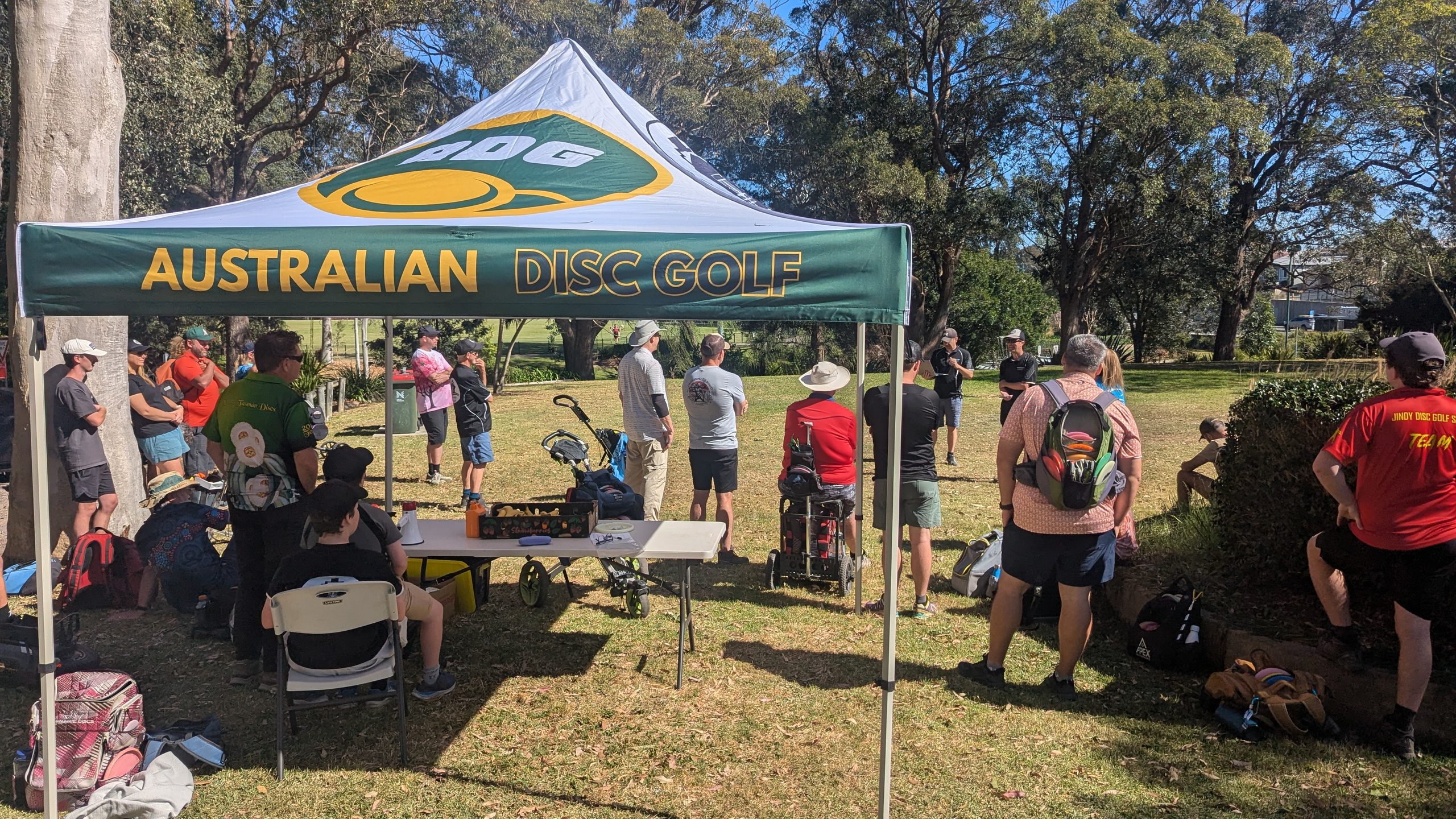
People get disc golf once they try it. Temporary baskets turn a paper proposal into something staff, councillors and neighbours can see.
- Take portable baskets to the site and get the parks team throwing.
- Run a come-and-try day with a youth centre, school or community group.
- Propose a pop-up course or a single event as a trial.
- Offer to start small: a pilot of 3 to 6 holes that can grow.
Kingston’s first course followed a 2016 pop-up tournament. Its second site was trialled with a pop-up course before council approved a permanent course, built in 2023.
In Melbourne’s Royal Park, a tournament led to a three-month summer trial. Club submissions to council meetings then got disc golf into the park’s draft masterplan.
Set up the club properly
Grants, insurance and council agreements all need a legal entity. Start this paperwork early, because it can hold up everything else.
- Form a committee (Wagga needed at least five) and adopt a constitution.
- Incorporate as a not-for-profit association with your state regulator, and register the club name.
- Affiliate with ADG and get a certificate of currency for public liability.
- Open a club bank account.
- Ask your state association whether disc golf is recognised by your state sport department. Some state grants and council partnerships are only open to recognised sports.
- Prepare a risk assessment for installation and play. The installation lead may need a White Card.
“Council gave the Association a licence agreement for the course… which has given them autonomy over the course in alignment with the community land management plan.”City of Mount Gambier, SA
Agreements like this, and most grants, are only open to an incorporated club.
Stack small grants and build in stages
Councils don’t always fund courses directly. Most clubs combine a council community grant, a state sport grant and an ADG grant, then build in stages.
- ADG grants: up to $1,000 for course infrastructure such as signage. Applications go through your state association and need some other funding alongside.
- Council community grants. Check the cycle, and note many don’t cover GST.
- State sport grants. In NSW, Office of Sport grants (see the Local Sport Grant Program) have funded several 9-basket courses.
- Councils can apply for infrastructure and health partnership funds that clubs can’t, as Blue Mountains and Latrobe did.
- Work out a minimum budget and a wishlist. Winning some grants can make you ineligible for others.
“We’re still a bit fringe to be having them full-fund courses and it takes time to work with them on state government grants.”State association, Western Australia
An ADG grant can also count as the matching contribution a council grant asks for.
Open the course and start collecting evidence
Installation is the easy part. Clubs regularly install courses themselves with a post-hole digger and hand tools. What comes next decides whether you get a second course.
- Walk the final layout with the parks team and adjust it to their requirements.
- List the course on UDisc, Disc Golf Metrix and Google Maps so travellers find it.
- Put a small sign on each basket. People will think they are bins.
- Offer loan discs, and run regular social rounds and come-and-try days.
- Record everything from day one: rounds, visitor forms, photos, events, school use and feedback.
- Report back to council at least once a year.
“I used Udisc as the usage measurement tool. They provide very good data in a presentable format. Clarence council were impressed with the platform.”Club volunteer, TasmaniaFrom a council
“Any data or supporting information would be fantastic.”City of Clarence, Tas, preparing to make its trial course permanent

What changes from state to state
The steps are the same everywhere, but the agencies and programs differ. Your state disc golf association and ADG state representatives will know the local details.
| Item | Where to look |
|---|---|
| Incorporating your club | Your state or territory’s fair trading or consumer affairs office. Fees and rules for constitutions differ. |
| Sport grants | Your state sport and recreation department. Programs, amounts and rounds change each year, and some require state recognition of the sport. |
| Land ownership and zoning | Your state’s online planning or property map viewer, such as SAPPA in South Australia. |
| State land | Each forestry, water and parks agency has its own management plans and permit process. |
| Construction safety | The White Card (general construction induction) is recognised nationally. Councils may add their own contractor or volunteer requirements. |
Growing players, before and after opening
Councils often ask for player numbers, and no club yet can mean no numbers. These ideas come from clubs and councils that have built a player base from scratch.
Find the players already there
Check the ADG club list and state association, start a local Facebook group, and post in community groups. People who play while travelling often live nearby.
Make it easy to try
Lend discs through the library or a local business, as Kingston and Latrobe do, and run regular come-and-try days. Latrobe now sells discs at its leisure centre because hirers wanted their own.
Go through schools and groups
Kingston gave schools their own disc sets, and disc golf is now in Kurnai College’s PE program. Organisations like Reclink run free sessions for community groups and record who takes part.
Use local media
In Wagga, the club’s Facebook page, posts in the town’s community Facebook group and the local radio community diary drew the most interest. The local paper, TV news and noticeboards helped too.
Run low-key social rounds
A regular social round with handicaps lets beginners and experienced players compete together. Offer paper membership forms too, because not everyone wants to sign up online.
Count casual players, not just members
Most players never join a club. Show council total use alongside membership, so a small club with a busy course isn’t judged on membership alone.
Why proposals stall
Not every approach works. These are real setbacks from the past few years, and what clubs would do differently.
Neighbours said no late
Council recommended a site and the neighbouring retirement village’s managers supported it, but residents opposed it and the project stopped.
Do instead: test a site with neighbours before investing in a full design.
Staff turnover reset the clock
Council contacts changed roles several times, and the process restarted each time.
Do instead: get decisions into council minutes or a masterplan, not just an officer’s inbox.
Unfamiliar concerns
Council raised mowing levels, snakes around in-ground sleeves, and event parking, and asked for another trial event.
Do instead: answer each concern in writing, offer to share the mowing, and agree to a trial.
The chicken-and-egg problem
Council wanted to see participants, but there were no players because there was no course.
Do instead: use participation data from comparable towns, then prove local interest with pop-up days.
Land rules said no
Many national park management plans, written decades ago, don’t allow disc golf, and changing them is slow.
Do instead: check the land’s management plan first. Belair was approved partly because it sits on a former golf course.
Offered too little
Council was happy to put 4 to 6 baskets in small parks, but had no plans for a full course.
Do instead: accept the small course, use its data, and propose a staged 9-hole course in the next capital works cycle.