Case study · Wagga Wagga, NSW
Two volunteers, one reserve, one year
In 2024, two local teachers set out to bring disc golf to a regional city 154 km from the nearest public course. Here is how they did it, what it cost, and what happened next.
- 2024
Research sites, costs and equipment. Contact NSW Disc Golf, ADG and the Central West Disc Golf club, whose president visits to look at sites.
- Proposal
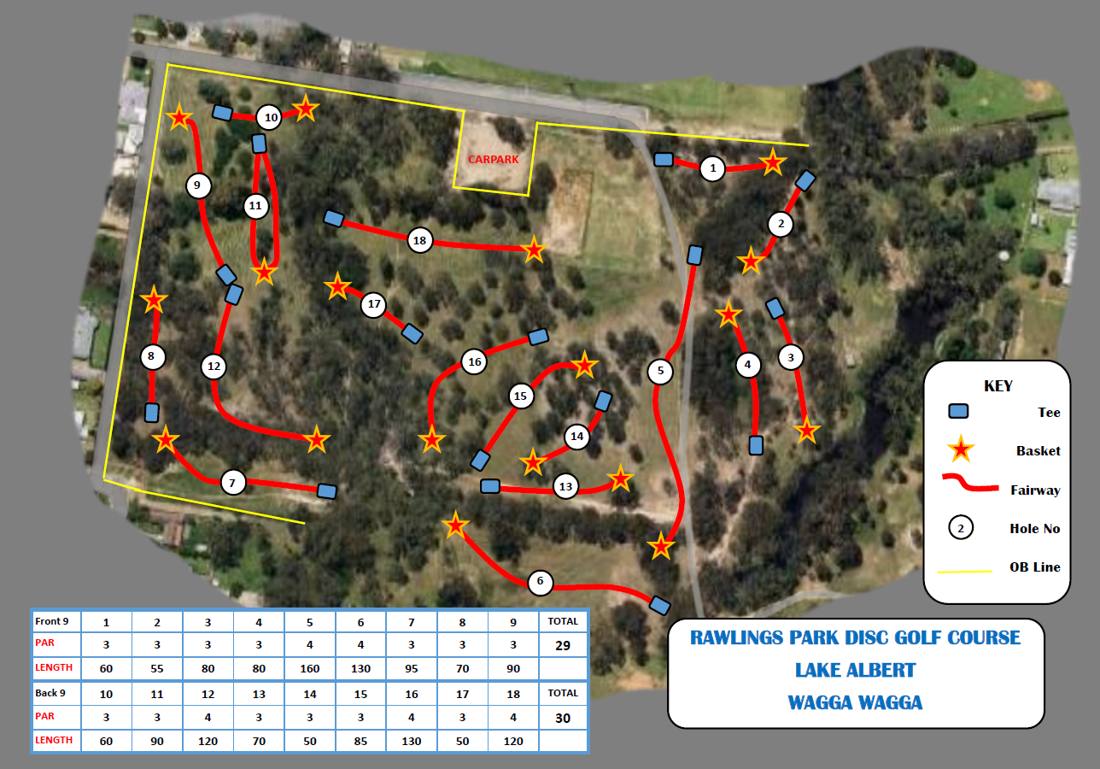
Letter and proposal to council’s Sport and Recreation officer, with a draft layout for Rawlings Reserve, Lake Albert: an underused, already-slashed reserve with parking, paths and cricket nets.
- 23 Jul 2024
Meeting with council covering the app, equipment, costs, course design and grants.
- Council meeting
Speak in support of the proposal. Council supports the concept but makes no direct funding contribution.
- Set-up
Form and incorporate the club, arrange insurance and a bank account. Win a council community grant and a $1,000 ADG grant.
- Install
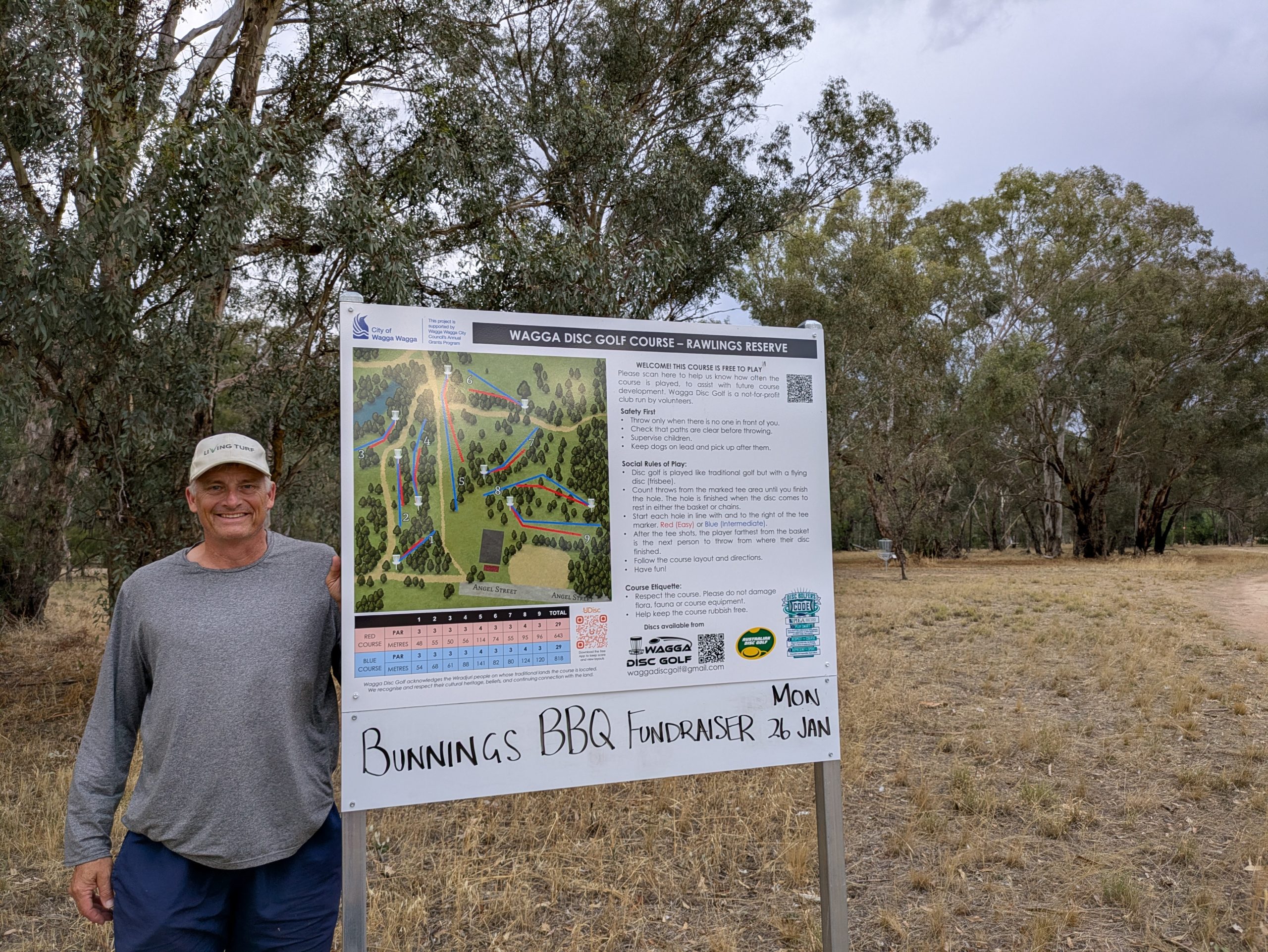
Risk assessment and White Card. Two volunteers install 9 baskets and 18 tees for under $10,000.
- 30 Aug 2025
First recorded round. Social competitions start in January 2026, then the club’s first ADG-sanctioned doubles event.
- Since opening
Further funding won to expand the course.
The first 13 months
UDisc figures cover 30 Aug 2025 to 27 Sep 2026. Visitor form and membership figures from Wagga Disc Golf, Oct 2026.
What made the difference
- Meeting council staff in person, and taking temporary baskets to the site so the sport and rec team could have a throw
- A written proposal that covered maintenance, safety, insurance and ownership, not just benefits
- Photos and videos of existing courses, plus first-hand stories from Canberra, Toowoomba, Jindabyne and Wangaratta
- Help from an experienced club and the ADG secretary on incorporation and insurance
What they’d tell the next club
- Start early, and expect it to take about a year
- Decide who the course is for: beginners, championship play or both
- You don’t need a contractor or a big upfront budget. Start with 9 baskets and add tees
- Fundraising is hard until people can see the course
- Membership grows slowly. Casual players will outnumber members
Despite a sign on every basket, some people genuinely thought the baskets were bins. Nobody has put rubbish in one yet.
The most common question, even though everything the club publishes says the course is free and run by volunteers.
Local horse riders now use the mown fairways as riding paths, and the fallen logs as jumps.