Course development guide · Australia
Get a disc golf course in your community
A practical guide for councils and land managers who want to know what disc golf can do for a park, and for players and clubs who want to get a course in the ground. Built from Australian council experience, club case studies, and what went wrong as well as what worked.
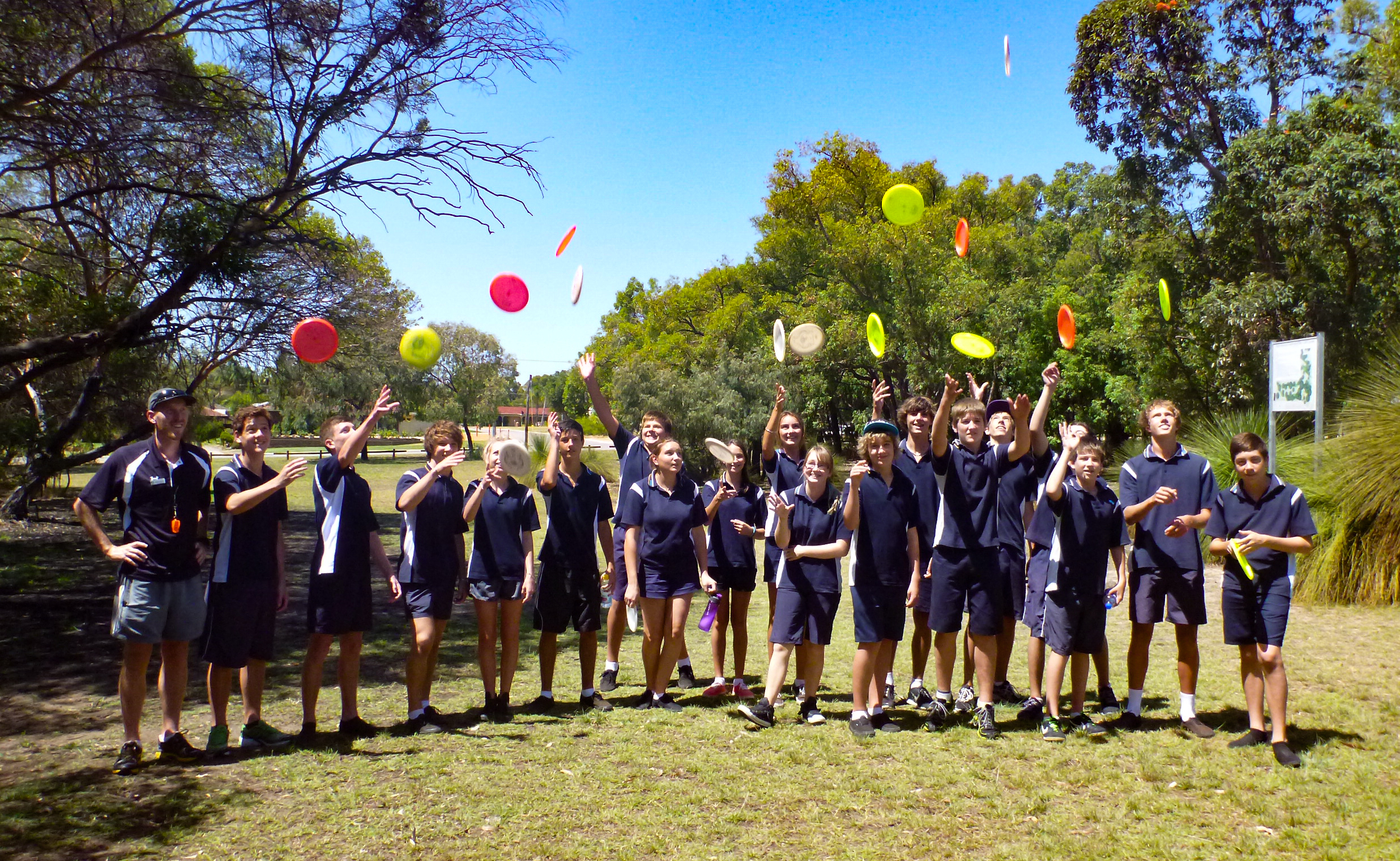
Explore the guide
Pick where to start
The guide is split into short pages. Councils usually start with the first two; players and clubs with the roadmap.
Disc golf in an Australian park: how a course works, who plays, and what councils say about it.
Disc golf in 60 seconds
Golf’s rules, a flying disc’s price tag
Players throw a disc from a tee to a raised metal basket, and try to finish each hole in as few throws as possible. A round of 18 holes takes 60 to 90 minutes, and most public courses are free to play.
How it’s played
Each hole has a tee area and a basket with hanging chains that catch the disc. Holes are usually completed in three throws (par 3), with longer par 4s and 5s. Beginner holes run around 50 to 70 metres. Most players walk the course with a small bag or a few discs.
What you need
One disc. Discs cost $10 to $35 each in Australia. Many clubs, libraries and councils lend or hire them, so people can try before they buy. No booking, no uniform, no special shoes.
Where it’s played
In parks, reserves, pine plantations, old tip sites and even old ball-golf courses. Trees are part of the challenge, so the land doesn’t need clearing or watering, and walkers, cyclists and dog walkers keep using the space.
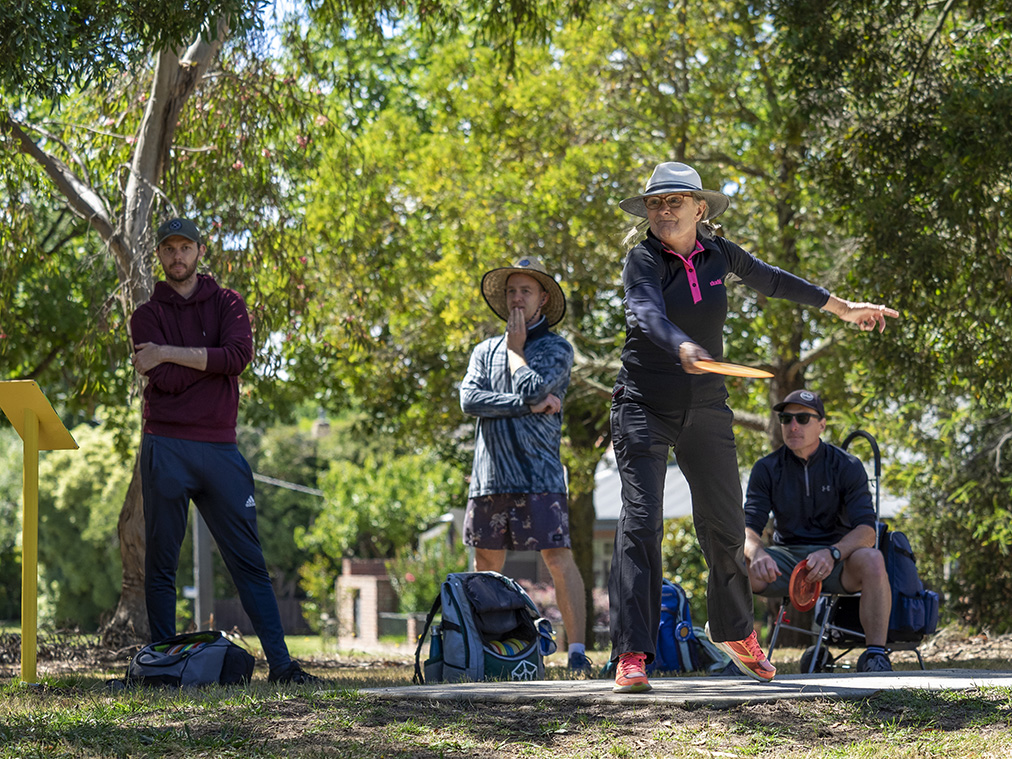
Never throw into a blind area or while other park users are within range. Use a spotter.
Follow posted rules. No littering, graffiti or damage to equipment, plants or wildlife.
Be positive and responsible, give way to other park users, and teach others.
Who plays: age of competitive players
Estimated share of players at Aussie Disc Golf Day 2026, by age. Around 15% of these players are women, up from about 5% ten years ago. Source: ADG NSW state representative estimate. Casual players, who never enter events, are not counted here.
How busy a city course gets: rounds per week
Estimated rounds per week at three free public courses in Sydney, scaled up from UDisc data on the basis that around 1 in 4 or 5 players records their rounds. A Sydney club survey found 80% of players live within 15 km of the course they play most. Source: ADG NSW state representative.
Resources
Where to go next
Have a council conversation underway, or a success story to share? Tell ADG, so we can connect you with people who have been through it.